When the gift options start multiplying, do not browse harder. Build a four-line brief, choose one gift style, keep only three candidates and remove anything with obvious duplication or compatibility risk. If the recipient already owns the basic gadget, game or hobby essential, move sideways to a more useful or personal adjacent gift instead of buying a shinier version of the same thing.
That simple process turns a catalogue-sized rabbit hole into a shortlist you can actually use. Here is how to do it without needing a colour-coded spreadsheet or a minor crisis in aisle seven.
Start with a four-line gift brief, not a product search
Before looking at products, define the job the gift needs to do. "They like tech" is not a useful brief; it could lead anywhere from a desk gadget to something requiring three apps, a firmware update and the patience of a saint. "They use their phone at their desk all day and appreciate practical upgrades" gives you a much clearer direction.
Write down four filters: recipient fit, occasion pressure, budget comfort and the reaction you want. These filters do not need to produce an exact item. Their purpose is to remove whole groups of unsuitable options before they distract you.
| Filter | Details |
|---|---|
| Recipient fit |
Decide this first: What do they use, do or talk about regularly? Useful examples: Working at a desk, travelling on weekends, hosting friends, collecting, cooking, playing games |
| Occasion pressure |
Decide this first: How significant or public is the occasion? Useful examples: Casual birthday, milestone, office exchange, thank-you, group celebration |
| Budget comfort |
Decide this first: What is your comfortable all-in range? Useful examples: Include any necessary accessories or extras, not just the main item |
| Gift job |
Decide this first: What should the gift achieve? Useful examples: Make life easier, create a shared moment, add personality, support a hobby, spark nostalgia |
Specific behaviour beats a broad personality label. "Outdoorsy" is vague. "Takes lunch and drinks on day trips" points towards portable drinkware, food storage or picnic helpers. "Likes games" is broad. "Hosts relaxed family game nights" tells you to favour approachable group activities over specialist hobby gear.
Once you have those four lines, use the general gift discovery page to translate the brief into one or two plausible categories. Browse with a hypothesis, not with the entire internet sitting on your shoulders.
Choose one primary lane: practical, playful or statement
Most gifts fall into one of three useful lanes: practical, playful or statement. The best lane depends on what you know about the recipient and how much risk the occasion can tolerate. Choosing one primary lane prevents a common shortlist failure: comparing a travel organiser, a novelty mug and an elaborate display piece as though they are trying to do the same job.
| Gift lane | Best fit, risk and upgrade |
|---|---|
| Practical |
Best for: Busy people, newer relationships, routine-based gifting Strength: Easy to imagine in real use Main trade-off: Can feel impersonal if it has no recipient-specific cue |
| Playful |
Best for: Friends, families, social occasions and fun-loving recipients Strength: Creates an immediate reaction or shared activity Main trade-off: Humour and participation levels must fit |
| Statement |
Best for: Milestones, confident hobby knowledge, collectors and nostalgia lovers Strength: Feels memorable and intentional Main trade-off: Greater taste, space and duplication risk |
A practical gift becomes more personal when it solves a recognisable nuisance. Think desk organisation for someone whose workspace is permanently staging a stationery rebellion, or a travel helper for someone who lives out of a weekend bag.
A playful gift works best when the recipient will use it with the people around them. If shared time is the real value, compare family games and activity-led gifts rather than choosing novelty for novelty's sake.
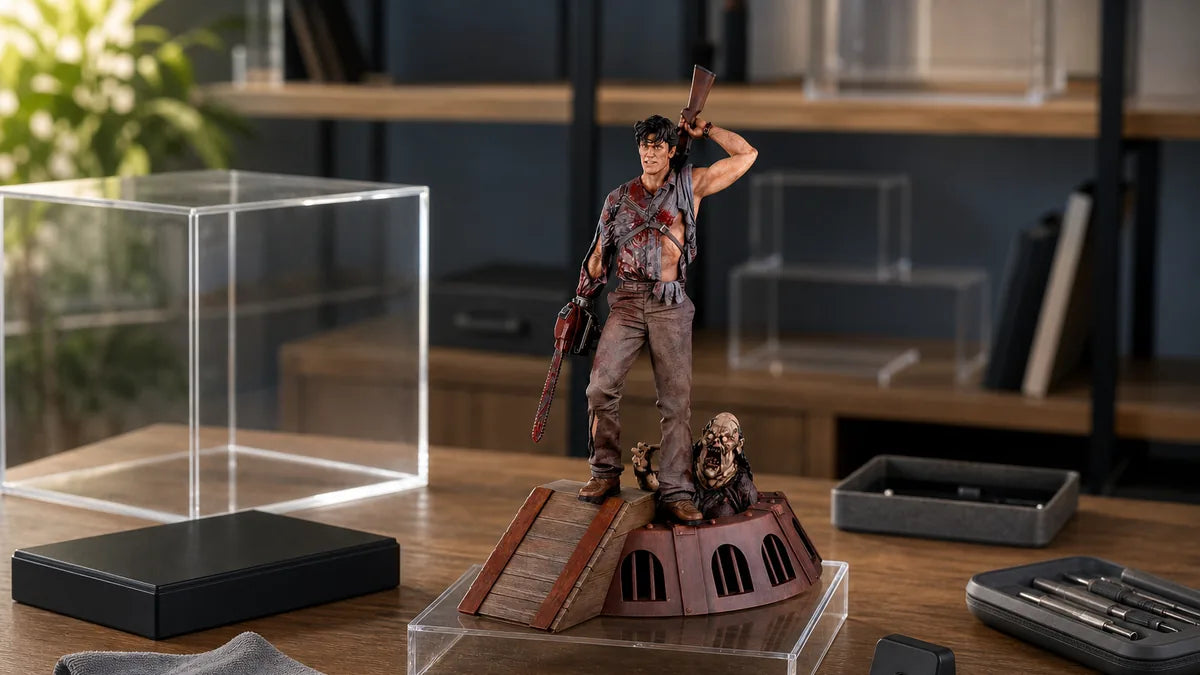
Statement gifts include display pieces, collectables, distinctive home accessories and nostalgia-led choices. These can be excellent when you know the recipient's interests precisely. They are less forgiving when you are guessing about fandom, style or available shelf space. That is the heart of the category trade-offs: practical is usually safer, playful needs social fit, and statement needs stronger knowledge.
For a birthday, use the relationship as your guide. A casual birthday often suits practical or playful gifting. A milestone may justify a statement path, but only when your confidence rises with the ambition.
Use replacement logic when they already own the obvious gift

The obvious gift is not always the useful gift. Someone interested in technology probably already owns the basic chargers, headphones and everyday devices they need. A keen cook already has kitchen tools. A game lover may have a shelf full of boxes waiting for their next turn. Buying another basic item creates duplicate risk and can force the recipient to compare your gift with something they carefully chose for themselves.
Replacement logic solves this by asking: what sits next to the thing they already own? The answer is often more personal because it reflects how they use their interests, not merely the interest itself.
| They already have... | Details |
|---|---|
| Everyday phone or computer gear |
Choose an adjacent gift such as...: A stand, cable organiser, desk light or travel case Why it can work better: Improves the setup without replacing a chosen device Check before choosing: Device dimensions, connections, power needs and desk space |
| Plenty of kitchen basics |
Choose an adjacent gift such as...: A serving, storage, timing or entertaining accessory Why it can work better: Supports how they cook or host Check before choosing: Available storage and whether they would genuinely use it |
| A growing game collection |
Choose an adjacent gift such as...: A different play format, puzzle, compact activity or organisation accessory Why it can work better: Adds a new occasion rather than another similar box Check before choosing: Player count, complexity, age suitability and whether an expansion needs a base game |
| Standard travel essentials |
Choose an adjacent gift such as...: Packing organisers, portable drinkware or a useful case Why it can work better: Solves a recurring travel nuisance Check before choosing: Size, weight and the type of trips they take |
| A collecting hobby |
Choose an adjacent gift such as...: Display, storage, care or shelf-support accessories Why it can work better: Respects the collection without guessing the next exact piece Check before choosing: Dimensions, display preference and existing setup |
| Basic desk supplies |
Choose an adjacent gift such as...: An organiser, writing accessory or distinctive desk object Why it can work better: Connects to a routine while adding personality Check before choosing: Workplace appropriateness and available space |
If the technology lane still looks right, browse electronics and gadgets with one rule: favour relevance to their setup over specifications you cannot verify.
A compact buyer-confidence check helps here:
- Who it suits: recipients with an established routine, hobby or setup you have seen in action.
- Who should skip: buyers who know only a broad interest but cannot tell how the recipient engages with it.
- Setup or compatibility risk: anything that connects, charges, mounts, expands another product or requires specific dimensions needs an extra check.
- If they already have X, choose Y instead: move from the core item to an organiser, accessory, display solution, shared activity or routine-based upgrade.
The aim is not to out-spec something they own. It is to notice the useful bit around the edges.
Set a budget band before six tempting options adopt you
A budget works best as a filter, not as a verdict on how much you care. Decide on a comfortable ceiling before browsing, then consider what kind of gift makes sense within it. This prevents a familiar sequence: opening with modest intentions, discovering one dazzling option and spending the rest of the search trying to justify it.
Use three relative bands:
- Low-pressure band: favour compact practical gifts, small hobby-adjacent items and playful additions. These suit casual birthdays, office occasions and small thank-yous.
- Middle comfort band: look for a stronger use case, better presentation or an item that supports a known routine.
- Higher-confidence band: reserve this for statement gifts, specialist categories or milestone occasions where recipient fit is unusually clear.
If your ceiling is firm, start with gifts under $30 rather than browsing broadly and filtering backwards. A budget-specific route removes noise immediately.
Also consider the full setup. A gift that needs extra components, a particular device, lots of display room or ongoing maintenance may carry more practical cost than its initial price suggests. When two options feel equally thoughtful, the self-contained one is usually easier to give and easier to enjoy.
Build a shortlist of three and score what matters

Three is the useful shortlist size. One option gives you nothing to compare; ten options are merely the catalogue wearing a fake moustache. Build a trio with distinct roles:
- The safe choice: strong recipient fit and low friction.
- The personal choice: clearly connected to a habit, interest or shared memory.
- The wildcard: a playful or statement option with more surprise and slightly more risk.
These should be genuinely different options, not the same object in three colours. Score each candidate from 0 to 2 against the criteria below: 0 means weak or unknown, 1 means acceptable, and 2 means strong.
| Criterion | Ask this question |
|---|---|
| Recipient fit | Can I connect this to something they genuinely do or enjoy? |
| Likely use | Can I picture when and where they would use it? |
| Personal signal | Does it show more thought than "this category seemed close enough"? |
| Distinctiveness | Is it meaningfully different from what they probably own? |
| Occasion fit | Is the tone and scale right for the relationship and event? |
| Low friction | Is it easy to set up, store, display, share or use? |
Do not let a high total score overrule a hard warning. An electronic gift with unknown compatibility, a collectable from the wrong series or humour that may make an office birthday memorable for entirely the wrong reason should be removed, not averaged.
For tied scores, use the one-sentence test: Can you explain why you chose it in one natural sentence? "I noticed you always take games when the family gets together" is stronger than "It looked popular." The sentence reveals whether your choice is based on the person or merely on the product page.
A second tie-breaker is the next-week test. Which gift can you most easily imagine them using, displaying or sharing within a week? It is not foolproof-keepsakes and hobby gifts may be slower burns-but it quickly exposes attractive clutter.
Remove risky options and keep a safe fallback path
A shortlist becomes useful when you are willing to cross things off. Run each remaining option through a final risk filter before comparing presentation, colour or other finishing details.
Remove or reconsider a gift when:
- it depends on knowing an exact model, size, series, edition or compatibility standard;
- the humour may not suit the relationship or a public setting;
- it takes up more storage or display space than the recipient appears to have;
- it assumes a hobby skill level you cannot confirm;
- it requires a base product, extra equipment or complicated setup;
- it risks duplicating an obvious household or personal item;
- it creates unwanted upkeep, cleaning or organisation;
- it feels more aligned with your taste than theirs.
Collectables and display gifts deserve an extra pause. Check whether the recipient displays items boxed or open, groups by theme, has spare shelf depth and actually wants the collection to grow. A display piece can be wonderfully personal; an accidental storage problem is less festive.
If every exciting option fails, switch to a safe fallback path rather than lowering your standards randomly. Choose a self-contained gift linked to an everyday routine, a shared activity that suits the group or a compact item that does not demand technical knowledge. For an office birthday, that might mean a broadly useful desk or home item. For a close friend, it might be a game, puzzle or playful accessory connected to how you spend time together.
You can also use top-selling gift ideas to spot familiar gift formats when you are stuck. Treat popularity as a source of possibilities, not proof of recipient fit. Your four-line brief still gets the deciding vote.
Gift-shortlist FAQs

How many options should be on a gift shortlist?
Aim for three: a safe choice, a personal choice and a wildcard. If the purchase is expensive or technically complex, extend the shortlist to five while you compare requirements. More than five usually means your filters are still too broad.
How do I choose between two equally good gifts?
Use the one-sentence test. Pick the option you can explain with the clearest recipient-specific reason. If both pass, choose the one with lower duplication, setup, storage or compatibility risk.
What should I buy if I know very little about the recipient?
Use context rather than personality. Consider where you know them from, how public the occasion is and what level of familiarity is appropriate. Self-contained practical gifts and low-pressure shared activities are generally easier to assess than personal wearables, specialist equipment, intimate humour or highly specific collectables.
Should I ask the recipient what they want?
Ask when the gift involves significant expense, technical compatibility, exact sizing or a specialist hobby. You can preserve some surprise by requesting a category, wishlist or choice between two general directions rather than asking for one exact item.
Are birthday gifts different from other shortlists?
The method is the same, but occasion pressure changes. A casual birthday allows more playfulness and modest practical gifts. A milestone may call for something more personal or memorable. The closeness of the relationship matters more than the number on the cake.
Follow one browse path and make the call
You do not need to inspect every plausible gift. Write the four-line brief, choose practical, playful or statement, compare three candidates and remove anything carrying a risk you cannot resolve.
The most useful browse-path CTA is not "see everything". It is "choose one route and compare three". Start with the LatestBuy gift guide, follow the category that matches your brief and stop browsing when one option has a clear recipient-specific reason, sensible friction level and comfortable budget.
That is your shortlist doing its job-and your cue to escape the rabbit hole while you are ahead.
For the next browse step, compare the fit against electronics and gadgets.