The best Father's Day gift for a dad you do not see every week is usually an adjacent gift: something that improves a routine you know he has, complements something he already owns or creates an easy reason to reconnect. You do not need a complete map of his current hobbies.
Distance should reduce the amount of guessing, not the amount of thought. Start with one reliable clue, choose a low-friction use case and avoid anything that depends on unknown sizes, technical compatibility or suspiciously specific taste. That works for dads, stepdads, father figures, grandfathers and older male relatives alike.
Treat distance as an information problem, not a relationship verdict
Not seeing Dad every week can make an ordinary gift decision feel like a pop quiz on someone else's life. What is he into now? Does he still use that barbecue? Has he quietly become a birdwatcher? Nobody sent a memo.
The solution is not to make a bigger guess. Use this simple formula:
- Find one current signal. Recall his last conversation, a recent photo, an everyday complaint or something he repeatedly does.
- Connect it to a real use case. Think desk, kitchen, lounge room, garden, car, travel bag or family visits.
- Choose the lowest-risk helpful or playful category. Favour gifts that work independently and do not require specialist knowledge.
Useful signals include phrases such as "I can never find...", "this old thing still works" and "we should do that next time". They reveal friction, habits and unfinished plans without requiring an interrogation worthy of airport security.
If your evidence is thin, ask someone who sees him more often a narrow question: "What does he use every weekend?" or "Is there anything around the house that keeps annoying him?" A focused question produces better clues than "What does Dad want?", which generally earns the highly actionable answer "nothing".
Once you have one clue, use a broader gift discovery page with that clue in mind. Browsing for "something for his desk" is far more productive than wandering through gifts hoping one announces itself with a trumpet.
Match the gift to your current level of connection
Good recipient fit comes from respecting the relationship as it is today. A warm but geographically distant relationship can support a personal or playful gift. A newer stepdad relationship may call for something more polished and practical. A grandfather you speak to occasionally may appreciate a gift tied to a shared ritual rather than a dramatic sentimental gesture.
Use the relationship to set the tone, then use current knowledge to choose the category.
| Connection and knowledge | Details |
|---|---|
| Warm relationship, limited day-to-day knowledge |
Strongest gift direction: Everyday upgrade with a short personal note Common mistake: Guessing at a new specialist hobby |
| Shared history, fuzzy current interests |
Strongest gift direction: Nostalgic cue connected to a real memory Common mistake: Buying random retro décor with no shared meaning |
| Regular calls, rare visits |
Strongest gift direction: Game, activity or practical item you can use together later Common mistake: Giving an "experience" without making a plan |
| Newer stepdad or father-figure relationship |
Strongest gift direction: Useful home, desk, travel or entertaining gift Common mistake: Forcing instant sentimentality |
| Older male relative with formal contact |
Strongest gift direction: Low-setup practical gift or familiar pastime Common mistake: Making assumptions about age, health or ability |
The title "dad" does not automatically make every joke safe or every sentimental message appropriate. Choose the emotional volume that fits your actual relationship.
When the relationship is warm but your knowledge is rusty, add meaning through the explanation rather than the object itself. "This reminded me of those Sunday breakfasts" is more personal than an expensive item presented without context. One honest sentence can do considerable heavy lifting.
If he already owns the basic gadget, choose the useful neighbour

Buying another version of something familiar feels safe, but it creates duplicate risk. Dad probably does not need a fourth generic charging cable, a second basic toolkit or another mug recruited into an already crowded cupboard.
Instead, replace the friction around the item rather than replacing the item itself. An adjacent gift shows that you noticed how he lives without pretending to know every technical detail.
| If he already has... | Avoid and choose instead |
|---|---|
| Phone and basic charging gear |
Skip the obvious duplicate: An unknown cable, dock or device-specific accessory Choose an adjacent gift instead: Desk organisation, travel storage or cable management with simple fit requirements |
| Barbecue tools |
Skip the obvious duplicate: Another general utensil set Choose an adjacent gift instead: Serving, storage, preparation or cleaning accessories linked to how he cooks |
| A basic toolkit |
Skip the obvious duplicate: A novelty multi-tool of uncertain quality Choose an adjacent gift instead: Task organisation, lighting, measuring or workshop storage |
| Coffee or home-bar basics |
Skip the obvious duplicate: More cups or glasses by default Choose an adjacent gift instead: Preparation, storage or hosting accessories that suit an existing ritual |
| Board games or card games |
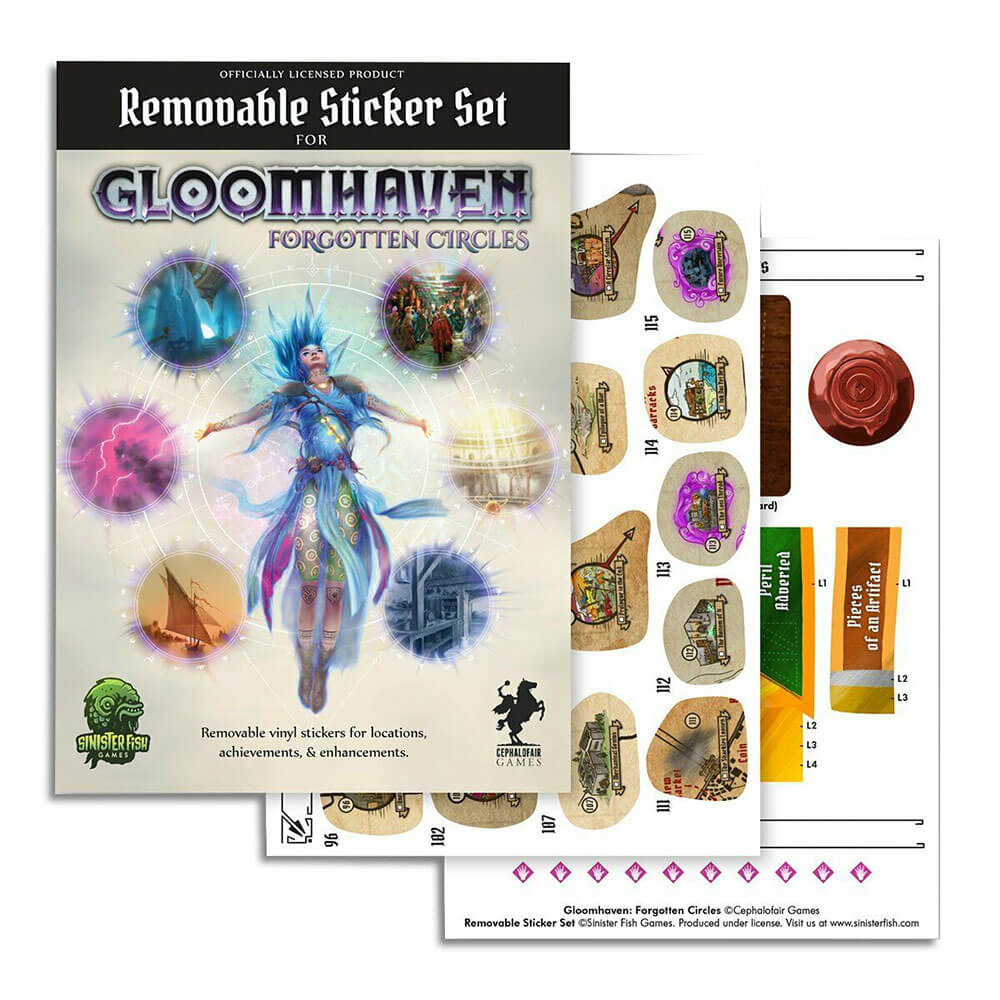
Skip the obvious duplicate: An expansion for a game you cannot confirm Choose an adjacent gift instead: A self-contained activity for your next visit or storage accessories for a known format |
| Collectables or display pieces |
Skip the obvious duplicate: A random character from an unverified fandom Choose an adjacent gift instead: Display, lighting, care or storage support-provided he has the space |
This replacement logic is especially useful for gadgets. Technical gifts can carry hidden compatibility traps: model numbers, charging standards, apps, accounts, operating systems and the dreaded drawer of cables nobody can identify. If you cannot confirm those details, move one step sideways into organisation, comfort or use-case support.
The same principle applies beyond tech. If he enjoys cooking, you do not need to select the knife that will define his culinary destiny. A practical kitchen helper, preparation accessory or storage solution may be more useful and much easier to choose confidently.
For a wider Father's Day browse, compare the male-recipient gift collection by use case rather than assuming that every dad wants the same combination of gadgets, grilling and jokes about getting older.
Pick a useful, playful, nostalgic or shared path
Most distance-friendly Father's Day ideas fall into four paths. None is universally better; the category trade-offs depend on what you know, how close you are and how much risk you are comfortable carrying.
| Gift path | Details |
|---|---|
| Useful |
Best when: You know his routine better than his taste Category examples: Desk, kitchen, travel, storage or everyday helpers Main trade-off: Can feel impersonal without an explanation |
| Playful |
Best when: You share an established sense of humour Category examples: Games, puzzles, quirky desk items or light novelty Main trade-off: Humour can miss if it relies on age, body or drinking jokes |
| Nostalgic |
Best when: You have a genuine shared reference Category examples: Retro-style accessories, music-era cues or keepsake categories Main trade-off: Random nostalgia feels decorative rather than personal |
| Shared |
Best when: You want the gift to create future contact Category examples: Self-contained games, outdoor activities or entertaining accessories Main trade-off: Needs a realistic plan to become a shared moment |
A useful gift becomes personal when you name the reason: "You mentioned your desk was getting chaotic," or "This looked handy for your weekend trips." A playful gift works when the joke belongs to both of you, not when the recipient has to politely decode it.
Nostalgia is strongest when it opens a conversation. Think of the old family game, the road-trip ritual or the era of music you both remember-not merely an object that happens to look vintage. Shared gifts work best when you attach a next step: "I'll bring this over next month," or "Save the first round for our next visit."
If two paths seem equally plausible, choose the one with less setup. A gift that can be enjoyed immediately has a better chance of becoming part of his life than one that arrives with an app, six components and a manual with ambitions.
Set a budget according to confidence, not guilt

Occasion pressure can make distance expensive. If you have not visited recently, it is tempting to compensate with a larger gift. Unfortunately, price cannot turn a shaky guess into a good fit. It can merely produce a more elaborate shaky guess.
Use budget comfort as a risk setting:
- Up to around $30: Focus on one clever helper, compact activity or playful item tied to a clear clue. At this level, relevance matters more than visual grandeur.
- Around $30-$75: Consider a well-chosen practical upgrade, self-contained game, home or desk item, or a small two-part gift built around one routine.
- Above $75: Spend here when you can verify his preferences, technical needs, available space or intended use. Specialised gadgets and statement pieces need stronger evidence.
Your relationship does not come with a minimum spend. A modest gift that says "I remembered this thing you do" can feel more connected than an ambitious object that says "the internet suggested dads like this".
If several family members want to contribute, use the extra budget to improve confidence rather than simply increasing scale. Confirm the model, hobby, colour, dimensions or missing accessory before buying. Higher spend should purchase better fit, not merely more gift.
Use six risk filters before committing
A good distance-friendly gift should survive without you standing nearby to install it, exchange it or explain the joke. Before choosing, run it through these six filters.
| Risk filter | Details |
|---|---|
| Compatibility |
Ask yourself: Does it require a specific device, app, account, fitting or power standard? Lower-risk move: Choose a non-technical adjacent category unless details are confirmed |
| Duplicate risk |
Ask yourself: Is this the obvious item everyone buys for this hobby? Lower-risk move: Support how he uses or stores the basics instead |
| Space and storage |
Ask yourself: Does it need wall, bench, shelf or cupboard room? Lower-risk move: Prefer compact, foldable or immediately useful categories |
| Setup effort |
Ask yourself: Can he use it without a project forming around it? Lower-risk move: Favour self-contained gifts with minimal assembly |
| Tone |
Ask yourself: Would the humour or message still feel comfortable in person? Lower-risk move: Use shared jokes and warm observations, not stereotypes |
| Assumptions |
Ask yourself: Does it presume anything about age, health, mobility or drinking habits? Lower-risk move: Base the choice on known routines rather than demographic clichés |
A simple traffic-light check keeps this quick:
- Green: You know where, when and how he would use it.
- Amber: The category fits, but a detail such as size, model or available space is uncertain.
- Red: The gift depends on several guesses, a specialist preference or a joke you would be nervous to explain.
Proceed when the important factors are green and there are no red compatibility issues. If you have two or more amber flags, step sideways to a simpler adjacent gift.
When sending rather than handing over the gift, confirm his current address and make sure he knows who it is from. If a gift message is not part of your chosen purchase process, send a separate card or message. Mystery parcels may be intriguing in detective novels; on Father's Day, clarity is friendlier.
Use this safe fallback path when you know very little

When information is scarce, choose a low-friction practical or activity-led gift with one personal layer. That means an item tied to a common routine, easy to use without technical setup and accompanied by a genuine reason for choosing it.
This is not surrendering to blandness. It is disciplined gift buying.
| Buyer-confidence check | Guidance |
|---|---|
| Who it suits | Dads, stepdads and father figures with whom you have a warm relationship but limited current hobby knowledge |
| Who should skip it | Buyers who know he is highly brand-loyal, technically particular or already trying to reduce possessions |
| Setup or compatibility risk | Keep it low; avoid device-specific accessories, unusual fittings, specialist expansions and app-dependent gear unless verified |
| If he already has X, choose Y instead | If he has the basic gadget, tool or hobby item, choose organisation, care, storage, display support or a shared-use alternative |
A reliable fallback formula is routine + small improvement + personal note. For example, choose a kitchen helper for the dad who always cooks when family visits, a desk organiser for the father figure who works from home, or a self-contained game for the grandfather who enjoys a bit of competition. The object stays practical; your reason supplies the connection.
If even the routine is uncertain, ask. Surprise is optional. Suitability is not.
Father's Day gift FAQs
What is the best Father's Day gift for a dad I rarely see?
Choose something linked to one routine you can verify, such as cooking, working at a desk, travelling, hosting family or playing games. Low-setup practical gifts and self-contained activities are safer than specialised hobby gear. Add a short note explaining the connection so the gift feels considered rather than generic.
How do I make a practical Father's Day gift feel personal?
Explain why you chose it. Mention the conversation, habit or memory behind the decision: "You always end up running the family game night," or "This made me think of your weekend cooking." Personalisation does not require names engraved on everything in sight; relevance is usually more powerful.
What should I buy if I do not know his current hobbies?
Avoid guessing at the hobby itself. Choose an adjacent category that supports everyday life: organisation, storage, home use, travel, entertaining or a shared activity. If another relative sees him regularly, ask what he currently uses or what minor annoyance keeps coming up.
Is a gadget a good gift if he already has the basics?
Only when you can confirm compatibility and a genuine missing function. Otherwise, choose the useful neighbour: storage for the gear, an organiser for the desk, support for travel or an activity you can enjoy together. Another basic gadget often creates duplication rather than delight.
How much should I spend on a dad I do not see often?
Spend an amount that feels comfortable for your relationship and circumstances. Do not treat distance as a debt. Keep the budget modest when your information is uncertain, and reserve higher spending for gifts whose preferences, dimensions, compatibility and likely use you can verify.
Ready to narrow it down? Write down one thing he does regularly, one thing he already owns and one small frustration or shared memory. Choose the adjacent gift with the least compatibility risk, then compare suitable directions in the curated gift-guide collection. Follow one clear path instead of trying to solve his entire personality in a single parcel.
For a relevant browse path, compare this with electronics and gadgets.